A low-speed impact can leave more than a dent behind. Beneath a cracked bumper may be a bent reinforcement bar, damaged suspension, displaced radar sensor, or compromised crumple zone—problems that are not reliably identified by appearance alone.
Choosing an auto body shop means evaluating more than paint quality or convenience. Sacramento drivers should look for documented inspections, manufacturer-based repair methods, trained technicians, appropriate scanning and calibration equipment, and clear communication about parts, timing, and insurance.
After a collision, Relux Collision provides a repair pathway that begins with assessment rather than assumptions. The right facility should explain what was found, why a repair is recommended, and how the finished vehicle will be checked before it returns to the road.
Start With a Safe, Accurate Damage Assessment
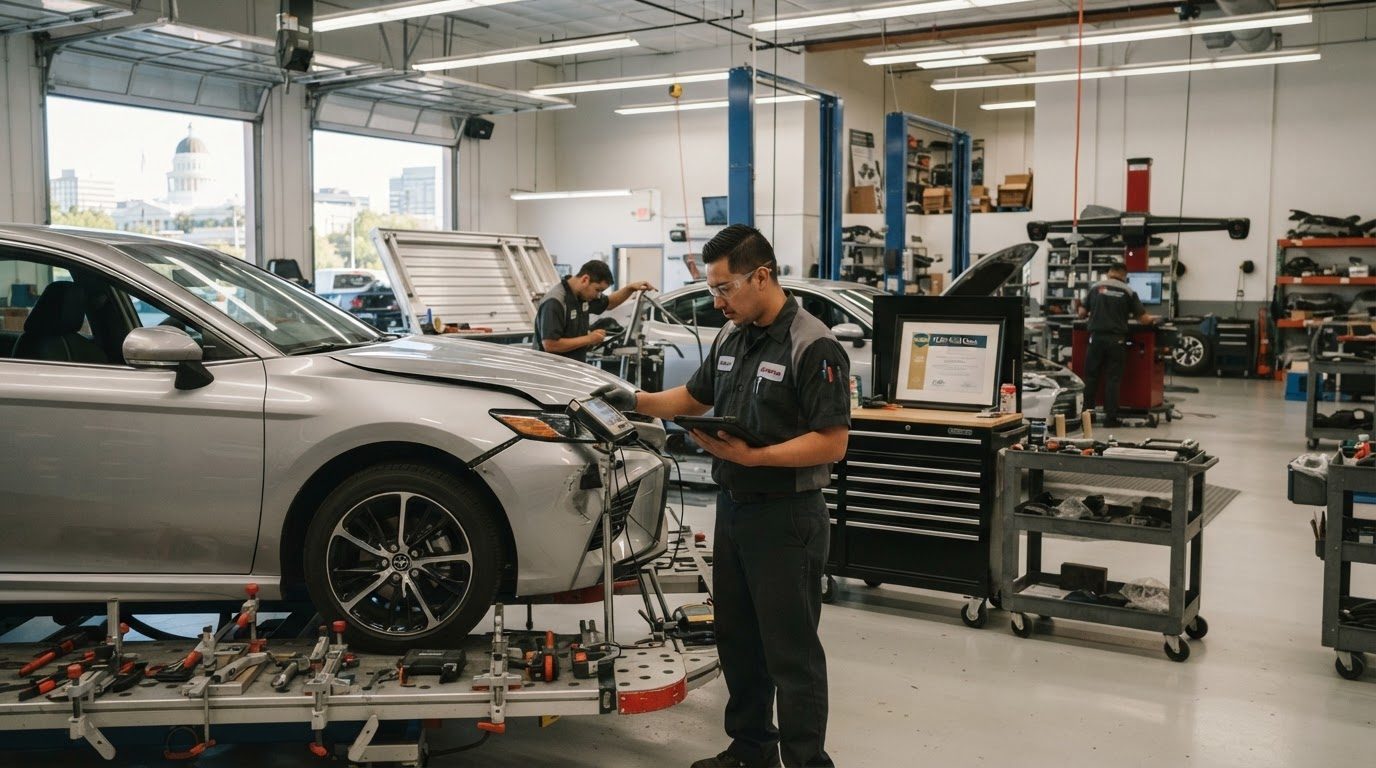
The initial inspection typically combines a visual examination, photographs, vehicle identification, and an estimate. Technicians check body panels, gaps, lamps, glass, wheels, tires, steering, suspension, restraints, and warning lights. Depending on the impact, they may also inspect frame alignment, underbody components, wiring, airbag modules, and advanced driver-assistance systems (ADAS).
Visible damage is only the starting point. A bumper cover may hide damage to its absorber or impact bar; a bent wheel can indicate suspension or steering damage; and a seemingly minor front-end impact can affect a camera, radar unit, grille shutter, or parking sensor. Diagnostic scanning may identify stored fault codes that cannot be found during a conventional walk-around.
Photos support the estimate and document pre-repair conditions. As disassembly begins, the shop may discover hidden damage requiring a supplement—an additional estimate submitted for insurer review. Repair recommendations should follow the vehicle manufacturer’s procedures, applicable technical bulletins, and accepted collision-repair standards, not simply the lowest initial price.
If airbags deployed, fluids are leaking, a wheel is misaligned, the hood or doors cannot close, warning lights are active, or the vehicle pulls, scrapes, or makes unusual noises, towing is generally safer than driving. Continuing to operate a damaged vehicle can worsen mechanical problems and create additional safety risks.
Auto Body Repair Services for Every Level of Damage
A qualified collision facility should be able to match the repair method to the material, damage pattern, and vehicle design. Services may include:
- Dent, crease, and scratch repair.
- Bumper cover repair or replacement.
- Fender, door, hood, trunk, and quarter-panel replacement.
- Frame measurement and structural repair.
- Suspension, steering, wheel, and alignment-related repairs.
- Paint preparation, color matching, refinishing, and blending.
- Reassembly, trim installation, lighting checks, and water-leak inspection.
Paintless dent repair (PDR) can preserve a factory finish when the paint remains intact and the metal is accessible. It is often effective for shallow door dings and some hail damage, but it is not suitable for sharply creased, stretched, rusted, or heavily damaged panels. Conventional repair and refinishing may be necessary when the substrate, paint, or panel structure is compromised.
Collision work is not limited to crashes. Sacramento vehicles may also need repairs after hail, wind events, falling branches, vandalism, or parking-lot damage. A hot, dry climate can make clear-coat failure and paint deterioration more apparent, while seasonal storms can contribute to flooding, debris impacts, and hail claims.
Relux Collision states that it repairs all makes and models, including luxury vehicles. That does not mean every vehicle is repaired identically. Aluminum panels, high-strength steel, carbon-fiber components, hybrid systems, specialized finishes, and manufacturer-specific fasteners require different tools, isolation procedures, and repair limits.
Modern Repairs Require Certified Technicians and Calibrated Systems
Certifications provide useful evidence of training, but customers should still ask what procedures and equipment will be used on their specific vehicle. I-CAR Gold Class recognition reflects an organization’s commitment to ongoing collision-repair training. OEM certification can add manufacturer-specific instruction for materials, welding, structural measurement, refinishing, and electronic systems.
A modern repair may involve:
- OEM repair procedures and part specifications.
- Three-dimensional measuring systems for structural alignment.
- MIG, pulse-MIG, or aluminum welding equipment where approved.
- Paint mixing systems, spray booths, infrared curing, and controlled refinishing processes.
- Pre-repair and post-repair diagnostic scans.
- Static or dynamic ADAS calibration equipment.
ADAS components can include forward-facing cameras, radar sensors, ultrasonic parking sensors, blind-spot modules, and lane-assistance hardware. Removing or repositioning a bumper, windshield, grille, mirror, suspension component, or camera mount can alter sensor aiming. Calibration may require a level floor, target boards, wheel-alignment data, road testing, or manufacturer-specific software.
Scanning and calibration are not cosmetic extras. They help verify that systems related to collision avoidance, occupant protection, and vehicle operation function as intended. A final quality-control process should include panel fit, paint finish, lamp operation, warning-light review, wheel alignment where applicable, diagnostic results, road testing, and documentation of completed calibrations.
Making Insurance, Towing, and Transportation Easier
Vehicle owners generally retain the right to choose their repair facility, even when an insurer recommends a particular network shop. The insurer may review estimates and negotiate covered costs, but the repairer should explain any difference between insurance allowances and the recommended repair.
A shop that works with major insurers can help transmit photographs, estimates, supplements, invoices, and repair updates. Customers should confirm what their policy covers, including rental limits, towing, OEM-part provisions, and deductible responsibility. Insurance approval does not eliminate the need to understand the repair plan.
After a collision, Relux Collision can coordinate towing to its facility. Before authorizing transport, remove valuables, photograph the vehicle if safe, and collect the police report number, claim number, insurer contact information, and vehicle registration details.
Rental-car coordination may be available through insurance, and shuttle support can simplify transportation to local rental providers. Deductible assistance or promotional discounts should be treated carefully: confirm eligibility, expiration dates, exclusions, and the exact amount in a written estimate. A discount should never obscure the total repair cost or change a safety-critical repair recommendation.
What to Expect From Estimate Through Final Delivery
A typical workflow includes:
- Inspection and estimate: The shop documents visible damage, identifies likely operations, and records vehicle information.
- Authorization and parts ordering: After customer and insurer approval, parts are sourced. Availability, back orders, and shipping can affect the schedule.
- Disassembly and supplement review: Technicians expose hidden damage and submit any necessary changes for approval.
- Structural and body repair: The vehicle is measured, repaired, or fitted with replacement panels according to applicable procedures.
- Refinishing: Surfaces are prepared, color is matched, adjacent panels may be blended, and coatings are cured under controlled conditions.
- Reassembly and calibration: Trim, lamps, sensors, glass, airbags, and electronic systems are restored and tested.
- Final inspection and delivery: The shop checks finish quality, panel alignment, warning lights, diagnostic results, road performance, and required documentation.
Repair times vary widely. A cosmetic bumper repair might take several days, while structural damage, imported parts, multiple supplements, or ADAS calibration can extend the schedule. Customers should request updates when parts arrive, supplements are submitted, and the vehicle enters refinishing or final inspection.
Before authorizing work, ask:
- Will parts be OEM, aftermarket, recycled, or remanufactured, and where will each type be used?
- Which manufacturer procedures apply to this repair?
- Will pre- and post-repair scans be performed?
- Is ADAS calibration required, and will results be documented?
- What does the warranty cover, and what exclusions apply?
- Will I receive an itemized final invoice and repair documentation?
Relux Collision advertises a lifetime repair warranty. Because warranty terms can exclude corrosion, misuse, unrelated damage, normal wear, or ownership changes, review the written limited-warranty document before relying on it. Keep the estimate, supplements, invoices, scan reports, calibration records, and photographs with your vehicle history.
To request an estimate, contact the shop by phone or submit an online inquiry. Have the vehicle year, make, model, mileage, location and description of damage, insurance and claim information, photographs, and towing status available. If the vehicle is unsafe to drive, say so immediately and arrange transport rather than risking further damage on Sacramento roads.