
Fast, Reliable Drain Cleaning for Huntington Beach Homes

A drain that changes from slow to completely blocked can turn an ordinary Huntington Beach morning into a plumbing emergency. Grease, hair, scale, and foreign objects may create a simple fixture clog, but repeated symptoms can also point to trouble deeper in the drainage system.

Homeowners searching for Drain cleaning near me should look for a provider that can diagnose the cause, not merely push an obstruction farther down the pipe. The right service depends on the fixture, blockage location, pipe condition, and whether wastewater is backing up elsewhere.

For local service, Plumbing By Tony handles residential drain cleaning and clog removal in Huntington Beach. Its published service information cites more than 17 years of experience, licensed and bonded technicians, customer-satisfaction commitments, and 24/7 emergency availability.

When a Drain Problem Needs Professional Attention

A single slow bathroom sink may result from hair or soap residue near the stopper. A plunger or careful removal of the trap can sometimes resolve that type of isolated obstruction. Professional attention becomes more important when:

  • The same drain repeatedly slows after temporary improvement.
  • Several fixtures drain slowly or back up at once.
  • A toilet gurgles when a sink, shower, or washing machine runs.
  • Wastewater rises through a floor drain or backs up into another fixture.
  • Drains produce foul odors or sewage smells.
  • Water stands in a tub after flushing a toilet.

Multiple failing fixtures usually indicate a branch-line or main sewer blockage rather than a problem at one drain opening. Tree-root intrusion, grease accumulation, pipe-scale buildup, a collapsed section, or a low spot—often called a belly—may be involved.

Chemical drain cleaners deserve caution. Repeated applications can damage some piping, create hazardous fumes, and leave caustic liquid in the line for a technician to encounter. They may also punch a narrow channel through a clog without removing the material, delaying an accurate diagnosis.

Overflowing toilets, sewage backup, or rapidly rising wastewater require urgent action. Stop using connected fixtures, keep people and pets away from contaminated water, and call for emergency service.

Drain Cleaning for Common Household Clogs

The fixture and symptom provide useful diagnostic clues:

  • Kitchen sinks: Grease, oil, food particles, coffee grounds, and garbage-disposal residue can adhere to pipe walls. A sink that drains slowly after cooking activity often has buildup in the trap or nearby branch line.
  • Bathroom sinks and tubs: Hair, soap scum, toothpaste residue, and mineral deposits commonly collect around the stopper, P-trap, or overflow passage.
  • Shower drains: Hair and body-care products can form a dense mat near the drain opening. If the shower backs up only after several minutes, the obstruction may be farther into the branch line.
  • Toilets: Excess paper, unsuitable items, or an object lodged in the trap can cause an isolated blockage. Gurgling or backup in multiple fixtures suggests a larger sewer issue.
  • Laundry drains: High-volume discharge can expose a partial obstruction that ordinary faucet flow does not reveal.
  • Floor drains: Standing water may reflect a blocked branch line, a main sewer restriction, or an infrequently used trap that has lost its water seal.

Recurring clogs should not be treated as routine maintenance alone. They can signal interior scale, damaged or offset pipe joints, tree roots, inadequate slope, or buildup beyond the reach of a basic hand auger. In older coastal properties, corrosion, sediment, and changing soil conditions may complicate the diagnosis; a camera inspection can distinguish a removable obstruction from a repair problem.

How Plumbing by Tony Diagnoses and Clears the Blockage

A sound drain-cleaning visit follows a practical sequence rather than relying on guesswork.

1. Review symptoms and history

The technician should ask when the problem began, which fixtures are affected, whether chemical cleaner was used, and whether prior cleaning provided only temporary relief. Running water at nearby fixtures can help reveal shared-line behavior.

2. Inspect accessible plumbing

The technician may examine the drain opening, trap, cleanout, shutoff area, and signs of leakage or water damage. The goal is to identify a safe access point and avoid unnecessary disassembly.

3. Select the appropriate method

Professional snaking, using a drain cable or auger, is effective for many localized obstructions such as hair, soft debris, and paper. It can restore flow quickly, but it may only create a path through heavy wall buildup.

Hydro jetting uses pressurized water to scour grease, scale, and sludge from the interior pipe walls. It is often preferable for stubborn or recurring buildup, but the technician should consider pipe material, age, structural integrity, and access before using high-pressure equipment.

The decision depends on clog location, severity, pipe condition, and previous service history. A fragile or damaged line may require a different approach than a sound pipe with hardened grease.

4. Test and verify

After cleaning, the technician should run water through the affected fixture and, where appropriate, test connected fixtures under a realistic flow. The visit should also identify leaks, damaged fittings, or drainage behavior that remains abnormal.

5. Investigate repeat or widespread problems

A sewer camera inspection is especially useful when multiple drains back up, roots are suspected, or snaking provides only short-lived relief. A camera can show root intrusion, cracks, offsets, corrosion, standing water, or collapse. Cleaning may restore flow, but structural defects require repair or replacement planning.

Emergency Drain Cleaning and Recurring Clog Prevention

Plumbing by Tony states that it offers 24/7 emergency drain cleaning in Huntington Beach and surrounding areas. Response time depends on technician availability, traffic, severity, and location, so callers should describe the exact symptoms and any active overflow.

Until help arrives:

  • Stop using sinks, toilets, tubs, showers, and appliances connected to the affected line.
  • Do not mix chemical cleaners or repeatedly pour them into the drain.
  • Shut off the fixture supply valve, or the home’s main water supply if an overflow cannot be controlled.
  • Keep electrical equipment away from standing water and treat sewage as contaminated.

Prevention is specific to each fixture:

  • Keep grease, oil, coffee grounds, and food scraps out of kitchen drains.
  • Use removable hair strainers in showers and tubs.
  • Do not flush wipes, paper towels, feminine products, diapers, or other unsuitable materials.
  • Avoid forcing hard objects or excessive paper into toilets.
  • Have recurring slow drainage evaluated instead of repeatedly masking it.

The service page recommends professional cleaning every one to two years. That is a general maintenance consideration, not a universal schedule. A household’s usage, pipe age, tree exposure, and history of clogs should determine the interval.

What to Expect From a Local Drain Cleaning Visit

A quality visit should clearly explain the suspected cause, proposed method, expected result, and condition of the accessible plumbing. Homeowners should receive an opportunity to ask whether the price covers basic clearing, hydro jetting, camera inspection, or additional repairs. Typical U.S. costs vary substantially by access and severity: a straightforward fixture clearing may run about $150–$400, while hydro jetting can range from roughly $500–$1,500 or more. Camera inspections, emergency timing, difficult access, and repair work may add to the total. Local quotes are more reliable than national averages.

Common questions

Can a plumber clean any household drain?
Most residential fixtures—including sinks, tubs, showers, toilets, laundry drains, and floor drains—can be serviced. The method must match the pipe size, material, access, and obstruction.

When is hydro jetting preferable to snaking?
Jetting is generally better for extensive grease, mineral scale, and wall buildup in structurally sound piping. Snaking is often more appropriate for a localized blockage or a line that should not receive high pressure until its condition is confirmed.

How quickly can emergency service respond?
A 24/7 offering means calls can be accepted at any time, but arrival depends on dispatch conditions, traffic, workload, and the severity of the backup. Ask for an estimated arrival window.

What happens if the clog returns?
The provider should reassess the line rather than repeatedly perform the same clearing. A camera inspection may reveal roots, a belly, pipe damage, or buildup that requires jetting.

When does a drain problem require repair instead of cleaning?
Cracks, collapse, severe offsets, persistent root intrusion, leaking joints, or inadequate grade are structural issues. Cleaning may provide temporary flow, but durable correction requires repair or replacement.

In California, licensed plumbing work and local permitting requirements may apply when drain service expands into sewer-line repair, excavation, or replacement. Ask what work is included, what requires authorization, and how the condition was confirmed before approving additional work.
Custom Curtains and Drapery Design for New York Homes and Businesses

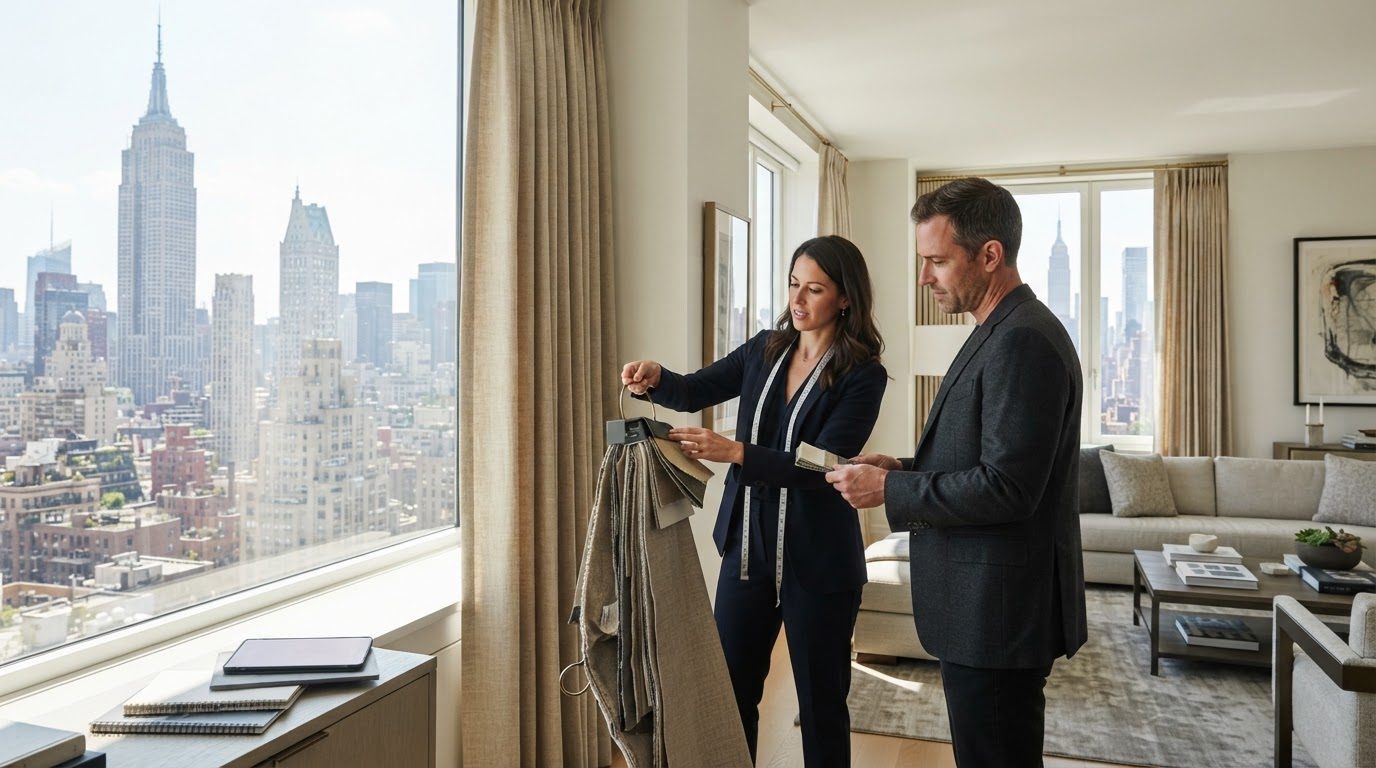
In New York, curtains must do more than decorate a window. They may need to soften intense afternoon sun, protect privacy from neighboring buildings, improve bedroom darkness, or add acoustic warmth to a room with hard surfaces. The right design balances architecture, daily use, fabric performance, and installation constraints.

People searching for a Curtains company New York typically need more than ready-made panels. They are often looking for measured, fabricated, and installed treatments that suit apartments, brownstones, offices, hospitality interiors, or retail spaces.

A practical starting point is to define the room’s purpose, desired light control, and operating method before selecting fabric. SUPREME SHADES & DRAPES WINDOW TREATMENT SERVICE COMPANY DESIGN & INSTALL is one local service option clients may evaluate alongside other providers, with attention to design scope, measurement procedures, fabrication standards, and installation capability.

Tailoring Window Treatments to New York Interiors

New York interiors vary sharply within a few blocks. A compact Manhattan apartment may have floor-to-ceiling glass and limited clearance around radiators. A Brooklyn brownstone may feature tall sash windows, decorative moldings, and uneven plaster. Offices, restaurants, hotels, showrooms, and event venues introduce different requirements for durability, brand presentation, fire-safety documentation, and installation scheduling.

Several conditions influence the design:

  • Ceiling height and window proportions: Mounting a rod or track closer to the ceiling can visually increase height, while extending it beyond the window frame allows panels to stack clear of the glass.
  • Architectural trim: Deep moldings, radiator covers, baseboards, and window seats affect bracket placement, hem length, and whether a return or ceiling track is needed.
  • Natural light: South- and west-facing windows may require solar filtering, blackout lining, or layered treatments to control glare and ultraviolet exposure.
  • Privacy: Street-facing rooms and closely spaced neighboring buildings often benefit from privacy sheers, lined drapes, or dual-layer systems.
  • Limited floor space: Stationary side panels, compact ripple-fold tracks, or roller shades paired with decorative curtains can preserve usable space.

Decorative curtains primarily frame a view and establish color or texture. Privacy drapes provide visual shielding, while blackout treatments reduce incoming light for bedrooms, media rooms, and hotel rooms. Layered window coverings combine functions—for example, a sheer for daytime privacy with a lined drape for nighttime darkness.

Custom Curtain Styles, Fabrics, and Hardware

The heading style determines how fabric hangs, stacks, and moves. Common options include:

  • Pinch pleat: A tailored, traditional appearance that works well with rings, traverse rods, or decorative poles.
  • Ripple fold: Smooth, continuous waves suited to contemporary interiors and ceiling-mounted tracks; it requires compatible carriers and precise fullness.
  • Grommet: Metal or fabric-reinforced rings create a casual, modern look, although the rod must be strong enough to support the moving panels.
  • Rod pocket: A simple sleeve conceals the rod but is generally better for stationary panels because frequent opening can be cumbersome.

Fabric selection involves both appearance and performance. Sheers diffuse daylight without fully blocking it. Linen-look materials provide relaxed texture but may wrinkle or require blended fibers for greater stability. Velvet offers depth, weight, and strong light absorption. Textured weaves can conceal minor handling marks, while performance fabrics are useful in busy commercial environments or homes with children and pets.

Lining changes the behavior of the finished drape. Standard lining improves opacity and helps protect the face fabric. Blackout lining substantially reduces light but can alter the drape’s stiffness and color. Interlining adds insulation and body, useful near drafty windows, though it increases weight and cost. Thermal performance matters in older buildings, but curtains should be considered supplemental—not a replacement for properly sealed windows.

Hardware is both structural and visual. Rods may be metal or wood; tracks can be wall-mounted, ceiling-mounted, manual, or motorized. Rings and carriers must match the heading style and fabric weight. Finials provide a finished appearance, while returns bring the panel closer to the wall and reduce side light.

Motorized curtains and shades are especially useful for tall windows, hard-to-reach openings, accessibility needs, and multi-window rooms. A professional specification should identify motor capacity, power source, control method, noise level, and integration requirements. Battery systems simplify retrofit work, whereas hardwired solutions may be preferable during renovation.

A Design-to-Installation Service That Fits the Project

A reliable project begins with a consultation rather than a fabric catalogue alone. Clients should bring inspiration images, floor plans if available, photographs of existing furnishings, and a clear description of how the room is used. The designer should discuss privacy, glare, blackout performance, cleaning expectations, child safety, and whether the treatments must coordinate with shades or upholstery.

Professional measuring is particularly important for:

  • Bay and bow windows.
  • Tall openings and double-height spaces.
  • Corner windows requiring passing or overlap arrangements.
  • Multi-window walls where head and sill heights may not align.
  • Recessed frames, curved walls, and openings affected by radiators or built-in furniture.

Measurements should document width, height, mounting surface, stack-back space, floor clearance, and obstructions. For commercial work, the process may also include reflected ceiling plans, finish schedules, mounting details, and coordination with electrical or sprinkler layouts.

Fabric samples, hardware samples, and design drawings allow clients to evaluate the complete direction before fabrication. Color should be reviewed in the actual room because daylight, LED lighting, and neighboring reflected light can change perception. Fullness—the amount of fabric relative to track or rod width—also affects price and appearance. Ripple-fold systems often use a defined fullness ratio, while pinch pleats require enough yardage to form consistent folds.

After approval, fabrication should include seam inspection, pattern alignment, hem review, heading verification, and hardware compatibility checks. Installation teams must account for elevator reservations, loading rules, narrow stairwells, building certificates of insurance, occupied rooms, and protected finishes. In hospitality or retail settings, phased installation may be necessary to avoid closing the entire space.

Residential and Commercial Drapery Applications

Residential Curtain Projects

Living rooms often use lined side panels or full-width drapery to soften daylight and visually frame the architecture. Bedrooms may require blackout lining, overlap at the center, and returns at the sides to reduce light leakage. Nurseries benefit from cordless shade systems or securely installed hardware, while home offices may need glare control for monitors and video calls.

Manhattan apartments frequently call for ceiling-mounted tracks, shallow returns, and treatments that work around radiators or limited wall space. Brooklyn brownstones may support more decorative rods and substantial fabrics, but older plaster and irregular trim make accurate anchoring essential. Dining rooms, libraries, and high-window apartments can use layered sheers and drapes to combine atmosphere with practical privacy.

Commercial and Contract Drapery

Commercial projects demand repeatability as well as style. Designers, architects, contractors, store planners, hotels, restaurants, lounges, showrooms, and event producers may require coordinated treatments across dozens of openings.

Important specifications include:

  • Consistent finished lengths, pleat spacing, and color lots.
  • Abrasion resistance, cleanability, and documented performance fabrics.
  • Flame-retardant or other code-related documentation where required by the venue or authority having jurisdiction.
  • Safe mounting, secure tracks, and appropriate controls for public areas.
  • A delivery and installation sequence aligned with construction milestones.

Custom drapery can reinforce branding through color and texture, improve acoustics by reducing reverberation, protect merchandise from glare, and make guest areas feel more comfortable. In restaurants and hotels, the fabric must withstand frequent cleaning and high-touch use. In event spaces, quick opening, stacking, and reconfiguration may matter more than purely decorative detailing.

Planning a New York Curtain Project

Before requesting a consultation, prepare:

  • Window dimensions, even if they are preliminary.
  • Photos showing the entire wall, ceiling, trim, radiators, and nearby furniture.
  • Room use and occupancy patterns.
  • Desired privacy, glare, insulation, and blackout performance.
  • Preferred style, colors, fabrics, and operating method.
  • Target installation date and any building access restrictions.

Pricing varies widely. As a broad planning range, basic custom curtains may start around $1,000–$2,500 per room, while premium fabrics, substantial fullness, interlining, complex hardware, or large windows can bring a room to $3,000–$8,000 or more. Motorization may add roughly $500–$2,000 per opening, depending on the motor, controls, power, and integration. Commercial projects are typically quoted by scope, fabric yardage, hardware, labor, and quantity rather than by room.

Ask prospective providers:

  • Who performs the site measure and verifies unusual conditions?
  • Where are the curtains fabricated, and what quality checks are performed?
  • What are the current lead times for fabric, hardware, and motorization?
  • How many design revisions are included?
  • What warranty applies to workmanship, motors, and hardware?
  • What cleaning, maintenance, repair, and reinstallation services are available?
  • Can the team supply insurance documents and meet condominium, co-op, hotel, or commercial building requirements?

New York’s dense buildings, older construction, strong seasonal sunlight, and demanding access rules make local project familiarity valuable. The strongest evaluation focuses not only on fabric selection, but also on measurement accuracy, transparent specifications, installation experience, and the ability to deliver a finished treatment that performs as well as it looks.


Custom Window Treatments for New York Homes and Apartments

New York windows rarely present a simple decorating problem. A prewar frame may be slightly out of square, a high-rise exposure can receive intense afternoon sun, and a street-level apartment may need privacy without sacrificing daylight.

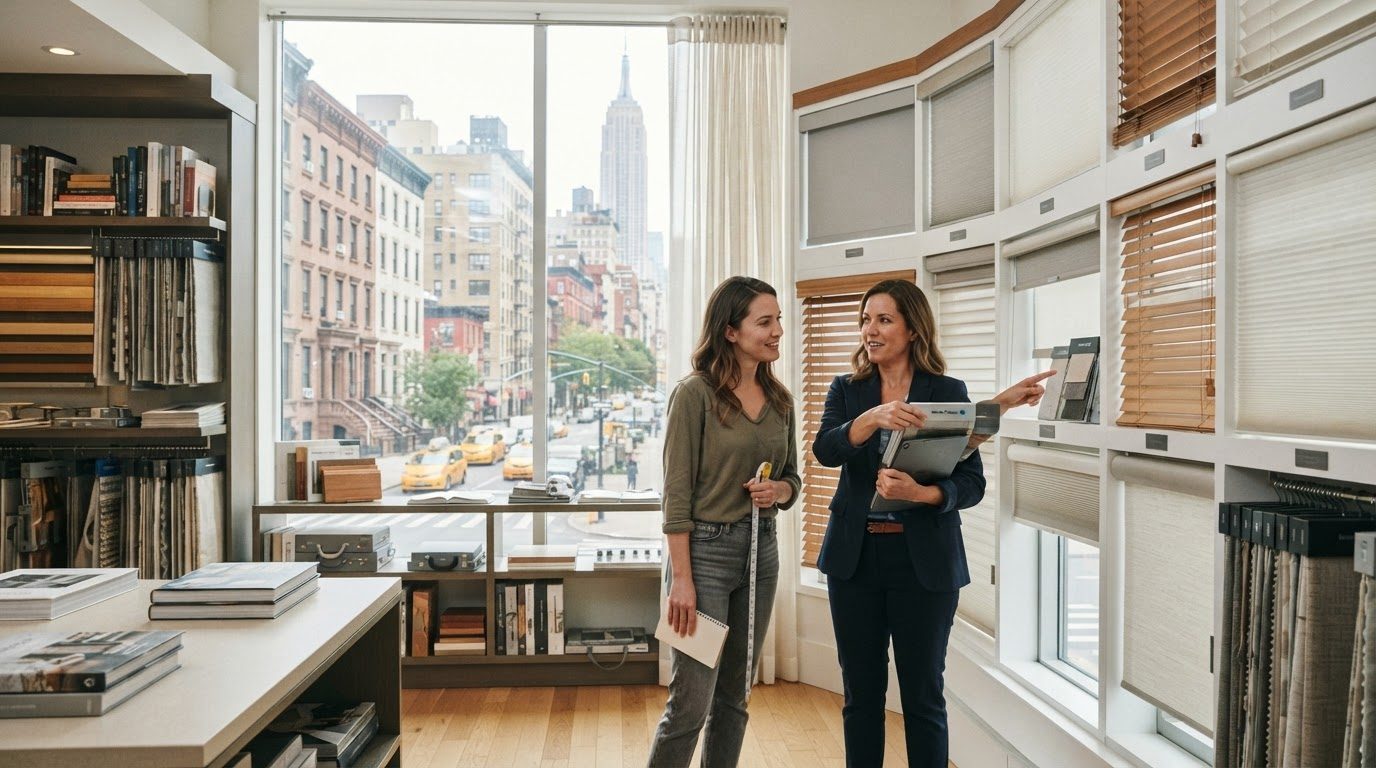
For shoppers comparing a Blinds store New York option, the important question is not simply where to buy blinds. It is whether the retailer can provide suitable products, accurate measurements, reliable installation, and service that works with the realities of city buildings.

A local provider such as The Blinds Source may offer a useful starting point for comparing custom blinds, shades, drapery, motorization, estimates, and installation. Treat every quote as a project specification: confirm materials, measurements, lead times, labor, warranty terms, and building-related costs before ordering.

Finding the Right Blinds Store in New York

New York shoppers generally have four purchasing routes:

  • Showrooms: Useful for comparing fabric opacity, operating systems, slat sizes, colors, and finishes in person. A showroom is particularly valuable when treatments will be visible across several rooms.
  • In-home consultations: A designer or installer can assess window recesses, trim, obstructions, radiator locations, and mounting surfaces. This is often more practical than carrying measurements from an apartment to a store.
  • Online ordering: Usually offers broad selection and competitive pricing, but the buyer assumes responsibility for measuring, product compatibility, and installation unless those services are separately arranged.
  • Local installation services: A nearby installer may understand freight elevators, walk-up access, co-op procedures, and common Manhattan, Brooklyn, Queens, and Bronx building conditions.

Evaluate more than the product catalog. Ask whether samples are available, who performs the site survey, whether installers are employees or subcontractors, and how corrections are handled if a treatment does not fit. Neighborhood access matters, but so do delivery routes, elevator reservations, parking limitations, and installer availability.

In a rental, confirm whether drilling is permitted and whether treatments must be removed at move-out. Co-op and condominium buildings may require alteration applications, insurance certificates, approved work hours, or advance notification to building management. These requirements can affect the schedule even when the product itself is ready.

Blinds and Shades for NYC Window Styles

Select the treatment according to the room, window geometry, and daily use rather than choosing a product category in isolation.

Compact rooms and street-facing windows

Roller shades provide a clean profile for kitchens, bedrooms, and smaller living areas. Solar shades use an open-weave screen fabric to reduce glare and ultraviolet exposure while preserving some outward visibility. Their openness factor—commonly expressed as a percentage—controls the balance between view, glare, and privacy. At night, illuminated interiors can remain visible from outside, so a privacy or blackout layer may be necessary.

Cellular shades suit apartments affected by winter drafts or temperature swings. Their honeycomb air pockets improve thermal resistance and can also soften the perception of outside noise, although they are not a substitute for acoustic glazing or building-envelope repairs.

Softer living spaces

Roman shades introduce folds, texture, and pattern in living rooms, dining areas, bedrooms, and nurseries. Choose a flat fold for a tailored appearance or a relaxed style for more visual softness. Confirm stack height: a large fabric stack can obscure part of a narrow window when raised.

Adjustable light and privacy

Wood blinds offer natural grain and substantial slats, while faux-wood versions resist moisture and are often easier to maintain. Aluminum blinds are lightweight and useful where narrow slats, durability, or a lower profile matter. Tilt control allows precise daylight adjustment, but cord safety and operating reach deserve attention in homes with children or pets.

Wide glass and unusual openings

Vertical blinds and panel-track systems are practical for sliding doors, oversized windows, and floor-to-ceiling glass. Panel systems create broad, clean-moving sections, while vertical vanes allow directional light control.

Shutters add architectural structure and strong privacy control, but their frame depth can conflict with shallow wells, casings, or operable windows. Drapery layered over blinds or shades adds insulation, light control, and character. Bay windows require careful decisions about headrail intersections, return angles, and panel clearance.

For narrow frames, measure the available width for brackets and controls. Deep wells may accommodate inside mounts, while unusually shaped or angled openings may require outside-mounted shades, specialty shutters, or custom drapery.

Choosing Window Treatments for Light, Privacy, and Energy Efficiency

Orientation and surrounding buildings determine the treatment’s performance. East-facing windows receive low morning sun; west-facing glass typically creates the most difficult afternoon heat and glare. South-facing exposures can receive sustained solar load, while north-facing rooms often prioritize daylight preservation. A high floor may have intense sun without street privacy concerns, whereas a lower or street-level apartment may need privacy throughout the day.

Fabric performance is usually described in three broad groups:

  • Light-filtering: Softens daylight and reduces glare without making the room dark.
  • Privacy: Limits visibility through the fabric, but performance can change when indoor lights are on.
  • Room-darkening or blackout: Uses dense fabric, backing, or side channels to reduce light. Small gaps around the shade can still admit brightness.

Bedrooms benefit from blackout roller, cellular, or Roman shades, often with side curtains to cover edge gaps. Living rooms usually need glare reduction and UV protection without losing all daylight. Home offices benefit from solar shades that reduce monitor reflections. Nurseries should combine cordless or motorized operation with reliable blackout performance. Street-level rooms may need privacy sheers, top-down/bottom-up shades, or layered treatments that preserve upper daylight.

Window treatments can reduce heat gain in summer and limit radiant chill in winter, but results depend on glass, seals, wall insulation, and installation quality. In a drafty prewar building, repairing failed caulk or loose sash components may deliver more benefit than adding a premium shade alone. Curtains over cellular or roller shades create a second air layer and allow privacy, insulation, and daylight settings to be adjusted independently.

Measuring, Designing, and Installing Blinds in New York

A professional custom-treatment process should include:

  1. Consultation: Discuss room function, style, privacy, light control, budget, and operating preferences.
  2. Material selection: Review full-size samples or swatches under the apartment’s actual daylight and artificial lighting.
  3. Site measurement: Record width, height, depth, diagonals, trim conditions, sill projections, handles, radiators, and obstructions.
  4. Quote and specification: Confirm product dimensions, mount type, fabric, control side, motorization, labor, delivery, taxes, and potential surcharges.
  5. Fabrication and delivery: Ask how long manufacturing takes and how products are protected and inspected before installation.
  6. Installation and inspection: Verify level mounting, smooth operation, secure fasteners, finished clearances, cleanup, and care instructions.

Professional measurement is especially important in prewar buildings, where plaster, masonry, and wood frames may be uneven. Floor-to-ceiling windows require attention to substrate strength, span, weight, and access equipment. A small measuring error can produce light gaps, binding, crooked headrails, or a treatment that cannot be removed without damage.

Before installation, ask:

  • Is inside or outside mounting recommended?
  • What drilling, anchors, or blocking are required?
  • Are cordless controls or motorized systems available?
  • Who handles cleanup and packaging removal?
  • What are the product, motor, measurement, and installation warranties?

Coordinate elevator reservations, loading access, building insurance requirements, and approved work hours. If installation coincides with a renovation or move, clarify responsibility for damage, storage, and final measurements after trim or paint is completed.

Motorized Blinds and Smart Window Treatments

Motorization is most useful for tall windows, hard-to-reach transoms, numerous treatments, high ceilings, and homes where daily manual adjustment is inconvenient. It can also improve accessibility and eliminate operating cords.

Common configurations include:

  • Remote-controlled systems: Straightforward for individual rooms or a small number of windows.
  • Rechargeable battery motors: Avoid wall wiring and simplify retrofit work, but batteries eventually require charging or replacement.
  • Hardwired systems: Suitable for new construction or major renovations, with fewer battery concerns but greater installation complexity.
  • Smart-home-compatible systems: Can connect with platforms such as Apple Home, Google Home, Alexa, or dedicated control hubs, subject to product compatibility.

Schedules can open shades gradually in the morning, close west-facing treatments during peak heat, provide evening privacy, or create an occupied appearance while residents travel. Ask about manual operation during a power outage, battery access after installation, hub requirements, network changes, child safety, and replacement parts.

Motorizing one window is relatively simple. A coordinated apartment-wide system requires consistent radio protocol, room grouping, scene programming, charging access, and a plan for future maintenance. Typical custom pricing varies widely: basic manual shades may cost roughly $150–$600 per window, while premium custom treatments can exceed $1,000. Motorization commonly adds several hundred dollars per opening, with integrated systems costing more. Exact pricing depends on size, fabric, controls, installation, and order quantity.

Questions to Ask Before Ordering Custom Blinds

Request clear answers to these questions:

  • What products, fabrics, slat sizes, and control systems are available locally?
  • Can I see physical samples or swatches before purchase?
  • Who performs the measurement and installation?
  • Does the quote include brackets, valances, removal of old treatments, delivery, taxes, and cleanup?
  • What are the current fabrication and installation timeframes?
  • What warranty applies separately to the product, motor, measurement, and labor?
  • Can the design satisfy rental, co-op, condominium, accessibility, and child-safety requirements?
  • What happens if the mounting surface is uneven or the finished product requires adjustment?

A well-designed New York window treatment balances geometry, daylight, privacy, energy performance, building rules, and long-term serviceability. The right store is the one that documents those decisions clearly before fabrication—not merely the one with the largest display of blinds.