New York windows rarely present a simple decorating problem. A prewar frame may be slightly out of square, a high-rise exposure can receive intense afternoon sun, and a street-level apartment may need privacy without sacrificing daylight.
For shoppers comparing a Blinds store New York option, the important question is not simply where to buy blinds. It is whether the retailer can provide suitable products, accurate measurements, reliable installation, and service that works with the realities of city buildings.
A local provider such as The Blinds Source may offer a useful starting point for comparing custom blinds, shades, drapery, motorization, estimates, and installation. Treat every quote as a project specification: confirm materials, measurements, lead times, labor, warranty terms, and building-related costs before ordering.
Finding the Right Blinds Store in New York
New York shoppers generally have four purchasing routes:
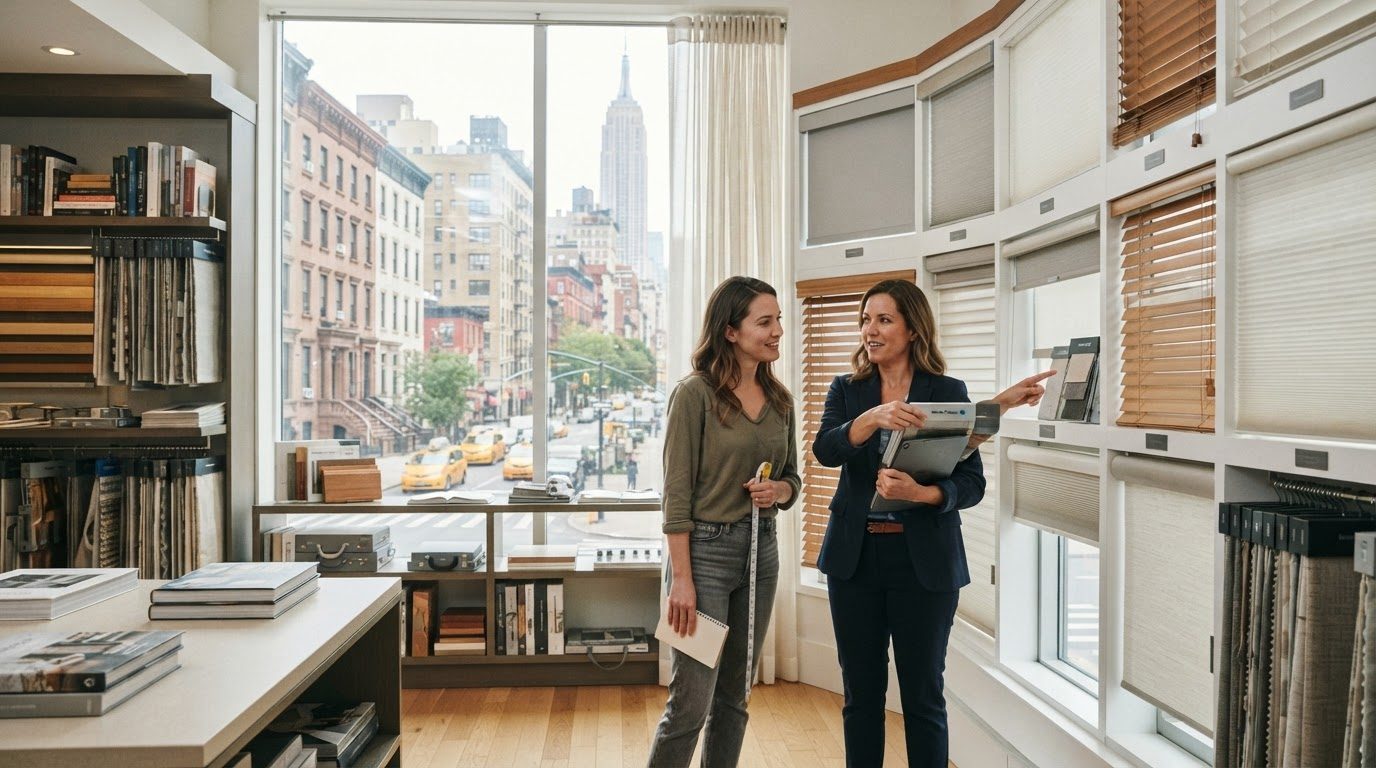
- Showrooms: Useful for comparing fabric opacity, operating systems, slat sizes, colors, and finishes in person. A showroom is particularly valuable when treatments will be visible across several rooms.
- In-home consultations: A designer or installer can assess window recesses, trim, obstructions, radiator locations, and mounting surfaces. This is often more practical than carrying measurements from an apartment to a store.
- Online ordering: Usually offers broad selection and competitive pricing, but the buyer assumes responsibility for measuring, product compatibility, and installation unless those services are separately arranged.
- Local installation services: A nearby installer may understand freight elevators, walk-up access, co-op procedures, and common Manhattan, Brooklyn, Queens, and Bronx building conditions.
Evaluate more than the product catalog. Ask whether samples are available, who performs the site survey, whether installers are employees or subcontractors, and how corrections are handled if a treatment does not fit. Neighborhood access matters, but so do delivery routes, elevator reservations, parking limitations, and installer availability.
In a rental, confirm whether drilling is permitted and whether treatments must be removed at move-out. Co-op and condominium buildings may require alteration applications, insurance certificates, approved work hours, or advance notification to building management. These requirements can affect the schedule even when the product itself is ready.
Blinds and Shades for NYC Window Styles
Select the treatment according to the room, window geometry, and daily use rather than choosing a product category in isolation.
Compact rooms and street-facing windows
Roller shades provide a clean profile for kitchens, bedrooms, and smaller living areas. Solar shades use an open-weave screen fabric to reduce glare and ultraviolet exposure while preserving some outward visibility. Their openness factor—commonly expressed as a percentage—controls the balance between view, glare, and privacy. At night, illuminated interiors can remain visible from outside, so a privacy or blackout layer may be necessary.
Cellular shades suit apartments affected by winter drafts or temperature swings. Their honeycomb air pockets improve thermal resistance and can also soften the perception of outside noise, although they are not a substitute for acoustic glazing or building-envelope repairs.
Softer living spaces
Roman shades introduce folds, texture, and pattern in living rooms, dining areas, bedrooms, and nurseries. Choose a flat fold for a tailored appearance or a relaxed style for more visual softness. Confirm stack height: a large fabric stack can obscure part of a narrow window when raised.
Adjustable light and privacy
Wood blinds offer natural grain and substantial slats, while faux-wood versions resist moisture and are often easier to maintain. Aluminum blinds are lightweight and useful where narrow slats, durability, or a lower profile matter. Tilt control allows precise daylight adjustment, but cord safety and operating reach deserve attention in homes with children or pets.
Wide glass and unusual openings
Vertical blinds and panel-track systems are practical for sliding doors, oversized windows, and floor-to-ceiling glass. Panel systems create broad, clean-moving sections, while vertical vanes allow directional light control.
Shutters add architectural structure and strong privacy control, but their frame depth can conflict with shallow wells, casings, or operable windows. Drapery layered over blinds or shades adds insulation, light control, and character. Bay windows require careful decisions about headrail intersections, return angles, and panel clearance.
For narrow frames, measure the available width for brackets and controls. Deep wells may accommodate inside mounts, while unusually shaped or angled openings may require outside-mounted shades, specialty shutters, or custom drapery.
Choosing Window Treatments for Light, Privacy, and Energy Efficiency
Orientation and surrounding buildings determine the treatment’s performance. East-facing windows receive low morning sun; west-facing glass typically creates the most difficult afternoon heat and glare. South-facing exposures can receive sustained solar load, while north-facing rooms often prioritize daylight preservation. A high floor may have intense sun without street privacy concerns, whereas a lower or street-level apartment may need privacy throughout the day.
Fabric performance is usually described in three broad groups:
- Light-filtering: Softens daylight and reduces glare without making the room dark.
- Privacy: Limits visibility through the fabric, but performance can change when indoor lights are on.
- Room-darkening or blackout: Uses dense fabric, backing, or side channels to reduce light. Small gaps around the shade can still admit brightness.
Bedrooms benefit from blackout roller, cellular, or Roman shades, often with side curtains to cover edge gaps. Living rooms usually need glare reduction and UV protection without losing all daylight. Home offices benefit from solar shades that reduce monitor reflections. Nurseries should combine cordless or motorized operation with reliable blackout performance. Street-level rooms may need privacy sheers, top-down/bottom-up shades, or layered treatments that preserve upper daylight.
Window treatments can reduce heat gain in summer and limit radiant chill in winter, but results depend on glass, seals, wall insulation, and installation quality. In a drafty prewar building, repairing failed caulk or loose sash components may deliver more benefit than adding a premium shade alone. Curtains over cellular or roller shades create a second air layer and allow privacy, insulation, and daylight settings to be adjusted independently.
Measuring, Designing, and Installing Blinds in New York
A professional custom-treatment process should include:
- Consultation: Discuss room function, style, privacy, light control, budget, and operating preferences.
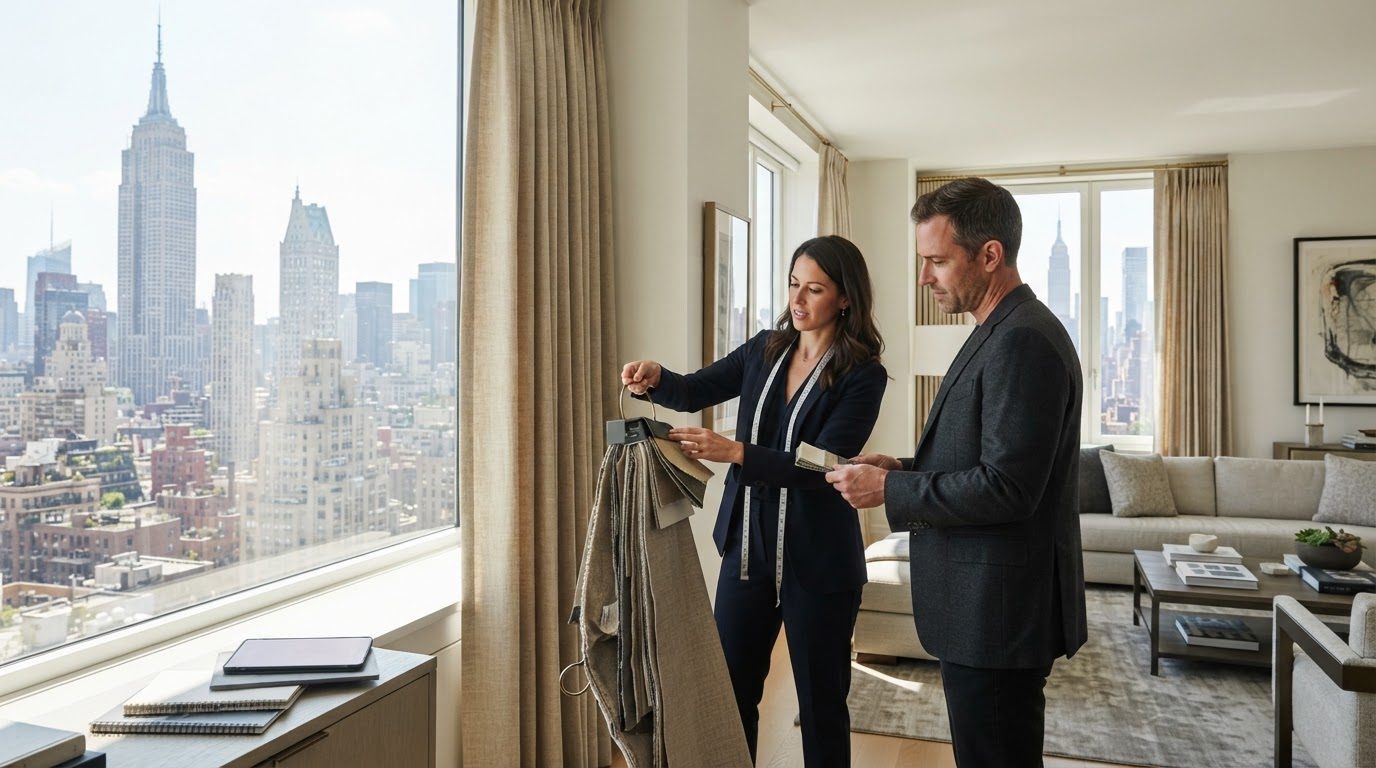
- Material selection: Review full-size samples or swatches under the apartment’s actual daylight and artificial lighting.
- Site measurement: Record width, height, depth, diagonals, trim conditions, sill projections, handles, radiators, and obstructions.
- Quote and specification: Confirm product dimensions, mount type, fabric, control side, motorization, labor, delivery, taxes, and potential surcharges.
- Fabrication and delivery: Ask how long manufacturing takes and how products are protected and inspected before installation.
- Installation and inspection: Verify level mounting, smooth operation, secure fasteners, finished clearances, cleanup, and care instructions.
Professional measurement is especially important in prewar buildings, where plaster, masonry, and wood frames may be uneven. Floor-to-ceiling windows require attention to substrate strength, span, weight, and access equipment. A small measuring error can produce light gaps, binding, crooked headrails, or a treatment that cannot be removed without damage.
Before installation, ask:
- Is inside or outside mounting recommended?
- What drilling, anchors, or blocking are required?
- Are cordless controls or motorized systems available?
- Who handles cleanup and packaging removal?
- What are the product, motor, measurement, and installation warranties?
Coordinate elevator reservations, loading access, building insurance requirements, and approved work hours. If installation coincides with a renovation or move, clarify responsibility for damage, storage, and final measurements after trim or paint is completed.
Motorized Blinds and Smart Window Treatments
Motorization is most useful for tall windows, hard-to-reach transoms, numerous treatments, high ceilings, and homes where daily manual adjustment is inconvenient. It can also improve accessibility and eliminate operating cords.
Common configurations include:
- Remote-controlled systems: Straightforward for individual rooms or a small number of windows.
- Rechargeable battery motors: Avoid wall wiring and simplify retrofit work, but batteries eventually require charging or replacement.
- Hardwired systems: Suitable for new construction or major renovations, with fewer battery concerns but greater installation complexity.
- Smart-home-compatible systems: Can connect with platforms such as Apple Home, Google Home, Alexa, or dedicated control hubs, subject to product compatibility.
Schedules can open shades gradually in the morning, close west-facing treatments during peak heat, provide evening privacy, or create an occupied appearance while residents travel. Ask about manual operation during a power outage, battery access after installation, hub requirements, network changes, child safety, and replacement parts.
Motorizing one window is relatively simple. A coordinated apartment-wide system requires consistent radio protocol, room grouping, scene programming, charging access, and a plan for future maintenance. Typical custom pricing varies widely: basic manual shades may cost roughly $150–$600 per window, while premium custom treatments can exceed $1,000. Motorization commonly adds several hundred dollars per opening, with integrated systems costing more. Exact pricing depends on size, fabric, controls, installation, and order quantity.
Questions to Ask Before Ordering Custom Blinds
Request clear answers to these questions:
- What products, fabrics, slat sizes, and control systems are available locally?
- Can I see physical samples or swatches before purchase?
- Who performs the measurement and installation?
- Does the quote include brackets, valances, removal of old treatments, delivery, taxes, and cleanup?
- What are the current fabrication and installation timeframes?
- What warranty applies separately to the product, motor, measurement, and labor?
- Can the design satisfy rental, co-op, condominium, accessibility, and child-safety requirements?
- What happens if the mounting surface is uneven or the finished product requires adjustment?
A well-designed New York window treatment balances geometry, daylight, privacy, energy performance, building rules, and long-term serviceability. The right store is the one that documents those decisions clearly before fabrication—not merely the one with the largest display of blinds.